How media manufacture legitimacy for military intervention
Wars do not always begin with the firing of the first missile; sometimes, before that, they are prepared on the battlefield of public opinion. At this stage, media can, by highlighting certain claims, downplaying doubts, and repeating official narratives, construct an image of the enemy in which military action appears not as a costly choice but as an unavoidable necessity. The issue is not that media alone start wars or that any critical report about a country is part of a military operation; the issue becomes dangerous when the boundary between proven fact, speculation, and political claim is erased and a media narrative, without sufficient evidence, becomes a justification for military action.
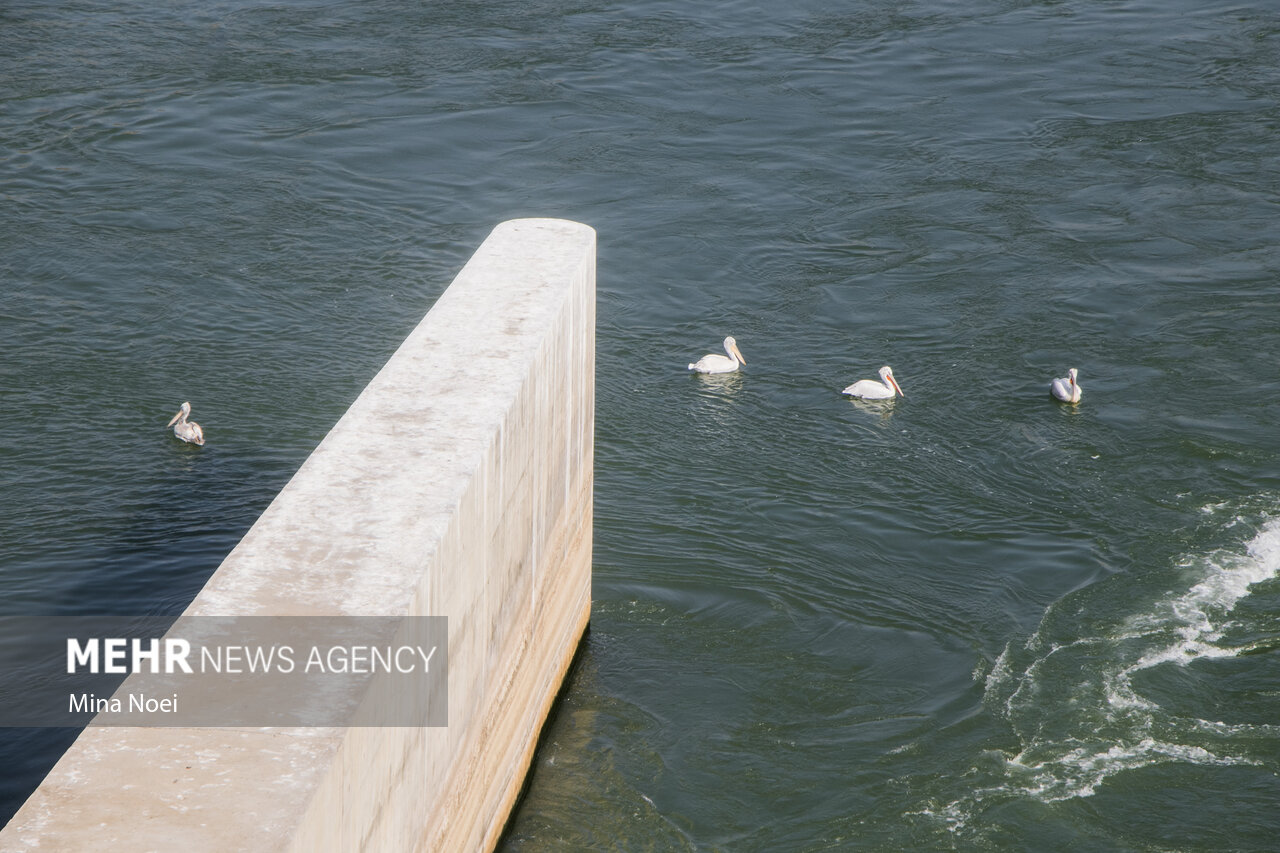
The New York Times report of November 16, 2026, titled “War May Answer Longtime Riddle of Iranian Dams Built for No Clear Reason” is a noteworthy example of this problem. In this report, Sanam Mahoozi and Erica Solomon, referring to the geographical location of certain dams and Iran’s water transfer projects near areas identified as locations of missile deployment or activities, raise the possibility that part of this infrastructure is connected to military objectives. However, the report’s main argument relies on geographical proximity and interpretation of the projects’ spatial location; while the proximity of a dam or water transfer facility to a military area cannot by itself prove its military function.
This distinction is not merely a technical or journalistic consideration; it has security and humanitarian consequences. When, regarding vital infrastructure such as a dam, a security suspicion is created without presenting clear evidence of its actual role in military activities, in practice the possibility is provided for a civilian asset to become a suspect matter in public opinion. The fundamental question is: if the report’s authors do not possess definitive evidence to prove such a connection, why is a hypothesis with such security weight highlighted to this extent? The right of media inquiry cannot be denied, but this right does not eliminate the responsibility to carefully distinguish fact from possibility; especially when the subject is vital infrastructure and the security of millions of people.
The importance of this concern becomes clearer by reviewing historical experiences. The New York Times itself produced one of the important examples of this problem on the eve of the US attack on Iraq in 2003. On September 8, 2002, this newspaper published a report about Saddam’s alleged attempt to obtain components related to the construction of an atomic bomb. The report by Michael Gordon and Judith Miller relied on information that the George W. Bush administration was raising to prove the threat of Iraq. On the same day, Dick Cheney, the US Vice President, cited the New York Times report on NBC’s “Meet the Press” program. In this way, a media narrative became one of the documents used by the senior US government official to bolster the claim of the Iraq threat. After the attack, an important part of the claims related to weapons of mass destruction was discredited, and on May 26, 2004, the New York Times officially acknowledged that its news coverage of this case had not been sufficiently precise and rigorous.
Another example goes back to the Gulf of Tonkin and the escalation of the Vietnam War. On August 4, 1964, Lyndon Johnson announced that American ships had been targeted by North Vietnamese forces for the second time and ordered retaliatory attacks. The next day, the New York Times reflected the American attacks on North Vietnamese bases and the government’s official narrative about this confrontation. But later it became clear that there were serious ambiguities and doubts about the occurrence of the second attack, and the initial reports of the ships’ crews were not reliable. The official narrative of the second attack played a role in shaping the political atmosphere necessary for the approval of the Gulf of Tonkin Resolution in the US Congress; a resolution that opened the president’s hand more widely for expanding military operations in Vietnam. Here too, the issue was not merely the publication of news; the issue was the reflection of an unconfirmed narrative at a moment when its political and military consequences went far beyond a daily news item.
These experiences show that media do not necessarily need to issue an attack order to influence the course of war. Sometimes it is enough to reflect the official narrative without rigorous verification, to marginalize doubts, and to construct an image in which military action appears logical or even unavoidable. Of course, none of these examples means that the media alone were responsible for starting the war; but their role in shaping the political atmosphere and reducing public resistance to war cannot be ignored either.
The recent New York Times report about Iran’s dams is important from this same perspective. If geographical proximity is considered sufficient to create suspicion about the military function of an infrastructure, this logic can also be applied to water, energy, transportation, and communications facilities in other countries of the region. Such an approach is also incompatible with the principles of international humanitarian law; because a civilian infrastructure does not become a military objective merely because of its proximity to a military center, and dams also enjoy special protection under certain conditions.
The New York Times, with its record in the Iraq case, cannot ignore the importance of its responsibility in publishing such reports. A newspaper that was previously criticized for weakness in verifying claims related to weapons of mass destruction and was forced to acknowledge professional error must today, more than any other media outlet, be sensitive to the security consequences of speculation about Iran’s vital infrastructure. Turning possibility into security suspicion and highlighting it without sufficient evidence is not merely a slip in reporting style; it can contribute to the normalization of a military view of civilian assets. War may begin with the decision of politicians and commanders, but sometimes, before that, it is shaped in the narratives that media present to public opinion.
MNA