Iran judiciary chief calls US claims on law and freedom a ‘bitter irony’
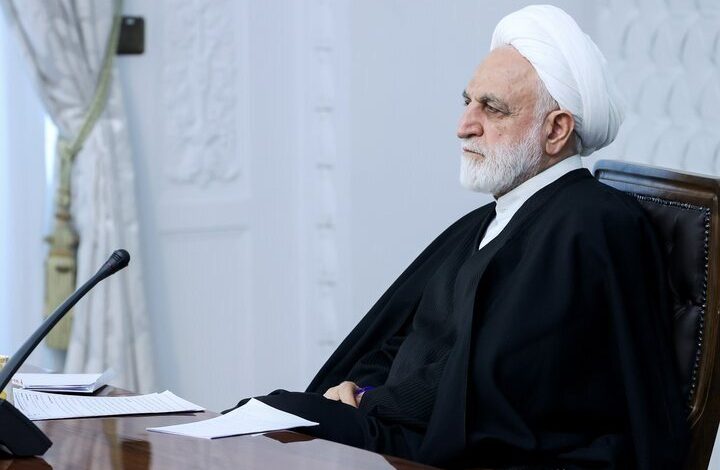
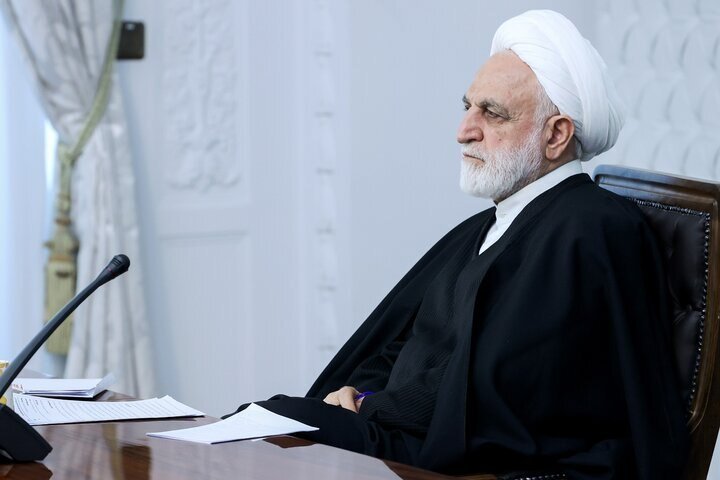
TEHRAN — Iran’s judiciary chief has sharply criticized the United States over its record on human rights, international law and freedom, describing Washington’s claims to champion those principles as a “bitter irony” considering its conduct on the world stage.
Speaking at a meeting of the Judiciary’s High Council on Monday, Gholam-Hossein Mohseni-Ejei also highlighted ‘growing respect for Iran’s resilience and political standing’ among officials from BRICS member states and religious leaders in India during his recent visit to the country.
Mohseni-Ejei traveled to India to attend a meeting of the heads of the judiciaries of BRICS countries. He said his meetings on the sidelines of the gathering offered a clear indication of a changing international perception of Iran’s power and its ability to withstand pressure from the United States and Israel.
According to Mohseni-Ejei, senior officials from several BRICS countries repeatedly emphasized that Iran’s resistance against the United States and Israel had influenced their own strategic thinking about dealing with major powers.
He said the experience had demonstrated that Washington and its regional allies could be challenged and defeated, portraying Iran’s confrontation with the two countries as a broader lesson for nations seeking to resist ‘hegemonic powers.’
The judiciary chief also stressed the importance of preserving political and social unity inside Iran, warning that statements or actions that undermine domestic cohesion could damage the country’s international image.
Turning to US foreign policy, Mohseni-Ejei said Washington’s repeated claims to defend law, order and freedom were difficult to reconcile with its actions.
He accused the United States of being among the leading violators of human rights and international law, arguing that Washington invokes the rights of women and children while its own military actions have caused civilian casualties.
He also accused the United States and Israel of responsibility for attacks that killed civilians and children, arguing that a country involved in such actions could not credibly portray itself as a defender of children’s rights.
Mohseni-Ejei referred to several incidents in Iran, including an attack on a school in Minab, a stadium in Lamerd and a wedding ceremony on Sirik Island. He rejected the characterization of civilian deaths in such incidents as merely “collateral damage.”
“If the US military claims to possess highly precise weapons, how could it have failed to identify the civilian nature of these sites?” he asked.
The Iranian judiciary chief said such incidents should not be allowed to fade into history without accountability and argued that those responsible for violations against civilians must ultimately be held to account.
He also pointed out ‘a longstanding pattern of US pressure and broken commitments,’ saying Washington’s coercive approach extends even to its allies.
As an example, he cited recent remarks by US officials concerning Canada, arguing that Washington’s conduct toward its partners demonstrated that its pressure-based foreign policy was not confined to countries opposed to the United States.