Iran and Armenia: A Bond Beyond Neighborly Ties
TEHRAN- At first glance, what connects Iran and Armenia may appear to be geographical proximity and the geopolitical considerations that come with it. A closer look at the history and culture of the two countries, however, reveals a relationship that goes far beyond the conventional ties between neighboring states. For centuries, Iran and Armenia have not merely existed side by side; they have been part of each other’s historical, cultural, and social developments. This shared presence can be traced in architecture, language, art, social traditions, and even the collective memory of their peoples. These ties have endured despite changing political borders and shifts in power.
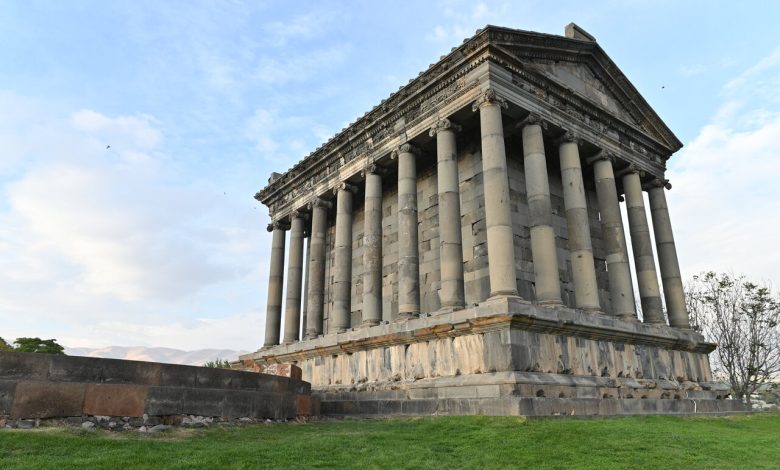
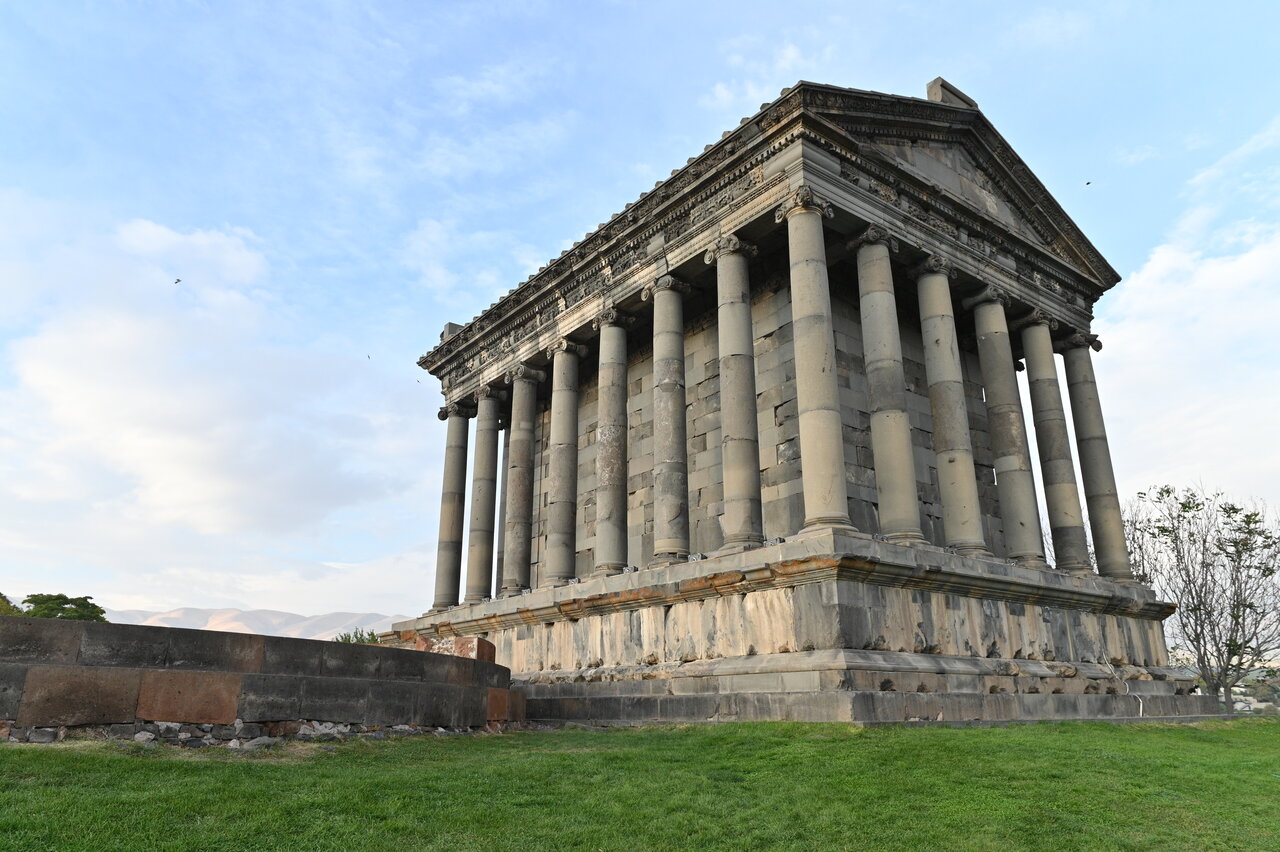
One of the most intriguing examples of this historical interconnection can be found at the Garni Temple, one of Armenia’s most important historical landmarks. As one of the few surviving examples of classical architecture from antiquity in the Caucasus, the temple is more than an ancient monument belonging to Armenian history. Its walls bear traces of different languages and cultures. Epigraphic research has identified inscriptions in Kufic script, as well as an inscription in Persian written in the Naskh script, at the site. Some of these inscriptions date back to the ninth and tenth centuries. Among them is a Persian inscription attributed to Bahram, a stonemason from Tabriz. These details offer a clear indication of the extent to which Iranian language and culture were present in the Armenian lands at different points in history. Naturally, the existence of such traces does not mean that the historical identities of the two countries are identical. Rather, it points to the shared historical layers that have developed between them over the centuries.
Elsewhere in this lush landscape, in the heart of Yerevan, stands a building that may be regarded as one of the most tangible symbols of the historical presence of Iranian culture in Armenia: the Blue Mosque. Commissioned by Hussein Ali Khan, the ruler of Yerevan at the time, the mosque was built in 1765–1766 and is considered a notable example of Iranian mosque architecture of its period. Architecturally similar to, and bearing the same name as, another mosque built in Tabriz around the same period, the Blue Mosque has stood for more than two and a half centuries. Today, it is the only active mosque in Armenia.
The building’s history during the Soviet era is also noteworthy. At a time when the Soviet Union’s strict secularist policies stripped many religious buildings of their original functions and led to the destruction of several historic mosques in Yerevan, the Blue Mosque escaped demolition. Historical accounts and official Armenian tourism sources refer to the role played by Yeghishe Charents, a prominent Armenian poet, and a number of the country’s intellectuals in preventing its destruction. Charents’ place in this account is particularly significant because his connections with Iran went beyond an interest in Persian culture and literature. His family had roots in the city of Maku, and his works later attracted attention in Iran and were translated into Persian. Although the mosque was converted into a history museum and subsequently put to other uses during that period, the original structure survived. Following Armenia’s independence, it was also restored with Iran’s participation and support, eventually resuming its religious function. The significance of this episode lies not simply in the survival of a historic building, but in the fact that intellectuals and cultural figures from one society made efforts to preserve a monument belonging to the religious and architectural tradition of another. Such an experience cannot be explained solely in political terms. It reflects an appreciation of historical and cultural heritage that transcends religious and identity-based boundaries.
This historical connection, however, is not limited to Iranian monuments in Armenia. Looking back toward Iran, we encounter the other side of the same story: the centuries-old presence of the Armenian community in Iran and its contribution to the country’s cultural and social development. The historic relocation of Armenians from Old Julfa to Isfahan under Shah Abbas I and the establishment of New Julfa in the early seventeenth century marked one of the most significant chapters in this history. Taking place against the backdrop of the Safavid–Ottoman wars and Shah Abbas’s population policies, this relocation eventually led to the emergence of one of the region’s most important Armenian commercial and cultural centers. Over time, Armenian merchants from New Julfa expanded their extensive trading networks as far as India and Europe, while also establishing churches, schools, cultural centers, and social institutions. Vank Cathedral in Isfahan, one of the most prominent legacies of this period, remains one of the most important religious and cultural centers of Iran’s Armenian community.
This presence was by no means confined to Isfahan’s New Julfa. Northwestern Iran is also home to some of the most important historical Armenian monuments, including St. Thaddeus Monastery, also known as Qara Kelisa, St. Stepanos Monastery, and the Chapel of Dzordzor. These sites were collectively inscribed on UNESCO’s World Heritage List in 2008. What is particularly interesting about UNESCO’s description of these monuments is its emphasis on the interaction between Armenian architectural traditions and Iranian, Byzantine, and Orthodox cultures. In other words, even from the perspective of international heritage institutions, the history of Armenian architecture in Iran cannot be examined without taking into account its interaction with Iran’s broader cultural and civilizational environment.
Yet perhaps more significant than buildings and historical monuments is the experience of communities that have lived alongside one another for centuries. Iran’s Armenian community is not simply a religious minority with a long historical presence. At many points in the country’s history, it has been an influential part of Iran’s cultural, artistic, scientific, and social developments. A look at some of the individuals who have left a lasting mark on contemporary Iranian culture and history is enough to illustrate this point.
In cinema, Samuel Khachikian stands among the most important figures in the history of Iranian filmmaking. Through his innovations in crime and thriller films, he had a considerable impact on the visual language of Iranian cinema. Loris Tjeknavorian, meanwhile, is a renowned composer and conductor whose work has earned him recognition in Iran and around the world. In sports, Andranik Eskandarian and Andranik Teymourian are among the footballers who have represented Iran’s national team at different times. In science, Alenoush Terian, an Iranian-Armenian physicist and a pioneer of astronomy and solar physics in Iran, holds a special place.
These individuals are merely a few examples from a much longer list. More importantly, their contributions to Iranian culture and society cannot be separated from their Iranian identity. Khachikian’s films form part of the history of Iranian cinema, just as Terian’s scientific achievements are part of the history of science in Iran. In many fields, the Armenian community has been present not on the margins, but at the heart of Iran’s cultural and social developments. This is a form of coexistence in which religious and ethnic differences have not prevented the emergence of a shared social identity and experience.
This historical and social experience appears to have also influenced how the two peoples perceive one another. For many Armenians, Iran is a familiar neighbor with a long history of cultural and historical connections. Likewise, for a considerable number of Iranians, Armenia is more than a neighboring country north of the Aras River. It is associated with names, historical landmarks, neighborhoods, and personalities that have become part of Iran’s cultural memory. Of course, it would be inaccurate to make a single generalization about the views of all people in either country. Nevertheless, these historical and social foundations have created favorable conditions for mutual understanding and the development of trust between the two societies.
The potential of these ties to contribute to the future development of bilateral relations should not be overlooked. Cultural and social relations can become a genuine asset in bilateral affairs only when they move beyond the commemoration of shared history and translate into practical cooperation. Cultural tourism, joint efforts to restore and preserve historical monuments, academic exchanges, joint film and media productions, and the translation and promotion of each country’s literature are just some of the areas in which cooperation could be expanded on the basis of this historical legacy. Under such circumstances, mutual understanding between the two peoples can complement official relations between the two governments, giving them greater depth and durability.
Iran and Armenia do not need to start from scratch in getting to know one another. Parts of each country’s history can be found in the heritage and monuments preserved on the other’s soil. The Blue Mosque in Yerevan and the historic Armenian churches in Iran, the Persian inscriptions at Garni and the Armenian quarter of Isfahan are just a few examples of this reality. Perhaps the most valuable aspect of this relationship is that, despite religious, linguistic, and political differences, the possibility of interaction and coexistence between the two societies has endured over the centuries. If properly recognized and put to use, this historical asset can serve as one of the most important foundations for Iran–Armenia relations in the years ahead.
Photo by Mkhitar Khachatryan / Armenpress News Agency