Iran, Russia pledge to deepen trade ties, remove banking, transport hurdles
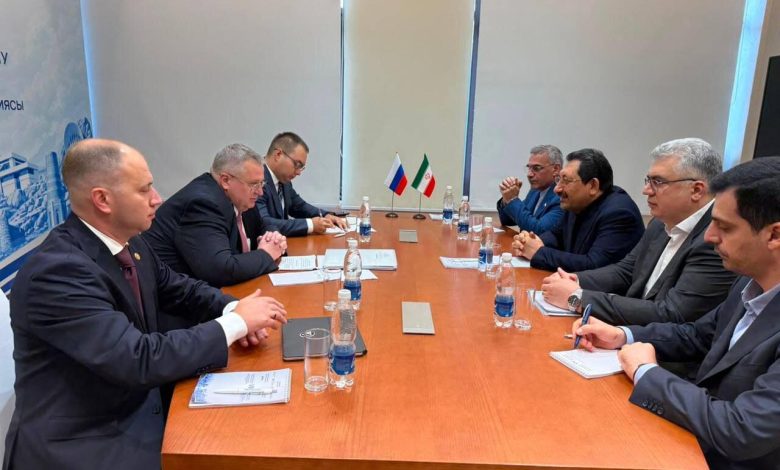
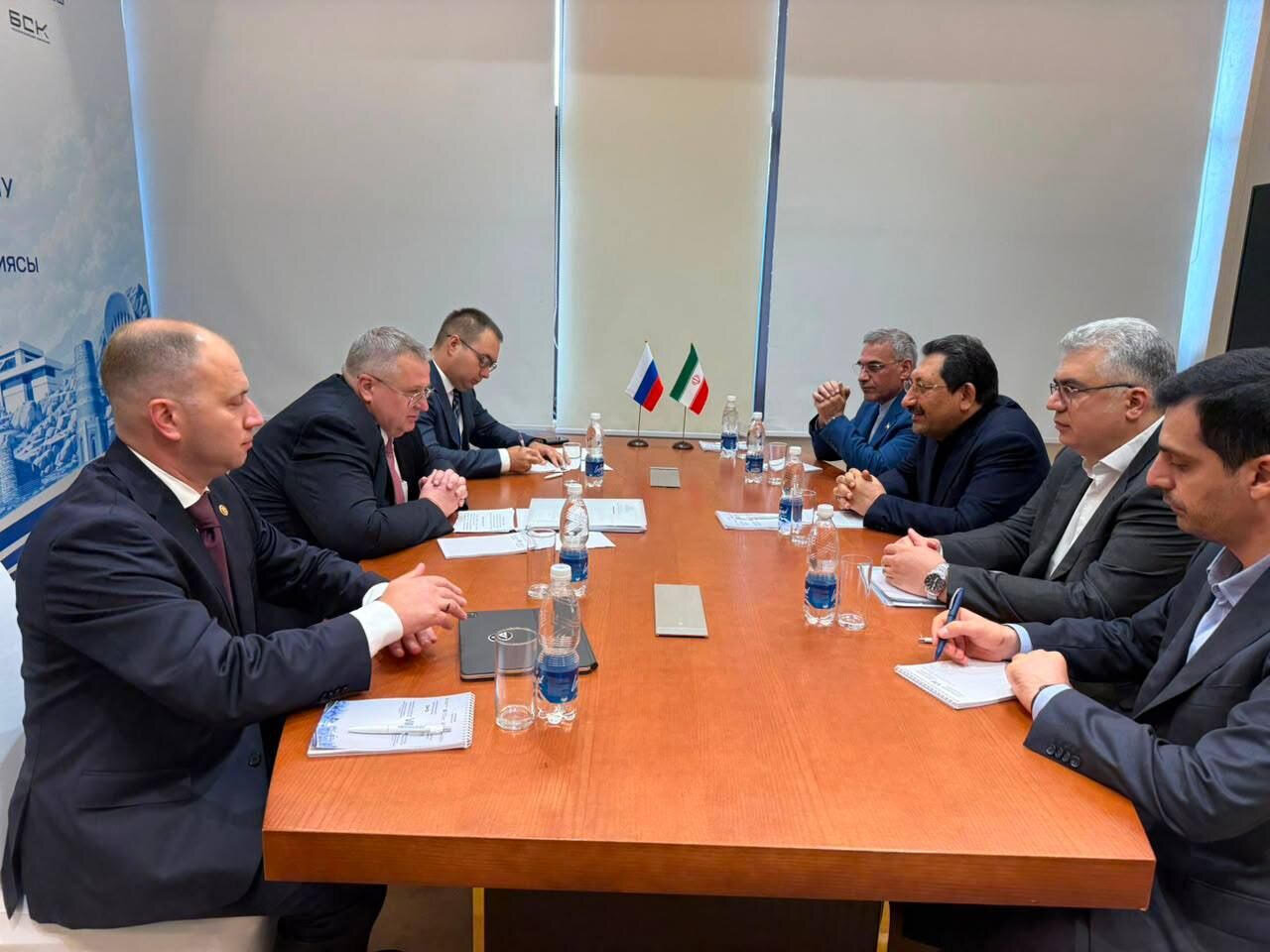
TEHRAN- The Minister of Industry, Mining and Trade emphasized the necessity of maximum utilization of the capacities of the free trade agreement between Iran and the Eurasian Union, development of industrial and trade cooperation, strengthening transport infrastructure, accelerating the construction of the Rasht–Astara railway, and formulating a comprehensive roadmap for bilateral cooperation.
According to IRNA reported on Thursday from the Ministry of Industry, Mining and Trade, Seyyed Mohammad Atabak, in a meeting with Alexei Overchuk, Deputy Prime Minister of Russia, while referring to the growing trend of trade exchanges between Iran and Russia over the past three years, stated: Despite the significant increase in trade volume between the two countries, the extensive capacities for economic, industrial, and investment cooperation necessitate that the level of trade relations between Tehran and Moscow be elevated far beyond the current status.
The Minister of Industry, Mining and Trade also cited the progress made in removing banking, transport, and logistics obstacles as important achievements of bilateral cooperation, and said: The activation of the joint banking messenger, expansion of correspondent banking relations between commercial banks, moving towards finalization of the monetary agreement between the central banks of Iran and Russia, and connecting the “Shetab” and “Mir” payment networks have provided the groundwork for facilitating trade exchanges using national currencies.
He also emphasized the full operationalization of the connection between the banking systems and financial messengers of the two countries, development of joint production of industrial parts, power plant equipment, machinery, and heavy vehicles, establishment of a unified digital customs, launching a green customs corridor and reducing goods clearance time, accelerating the Rasht–Astara railway project, development of the maritime transport fleet, and other matters.
Atabak announced the readiness of the Ministry of Industry, Mining and Trade of Iran to formulate and update a comprehensive roadmap for industrial and trade cooperation between the two countries and to form a joint industrial, mining, and trade working group, and expressed hope that with the implementation of these programs, a new chapter of strategic cooperation between Tehran and Moscow in the fields of industry, mining, trade, and investment will be inaugurated.
During this meeting, Alexei Overchuk, Deputy Prime Minister of Russia, while offering condolences for the martyrdom of officials, scientists, and a number of Iranian people in the third imposed war, emphasized the development of trade and industrial capacities between the two countries.
———————-Ground should be facilitated for providing Iran’s technical-engineering services in Russia
The Deputy Minister of Industry, Mining and Trade for Commercial Affairs, referring to the capabilities of Iranian technical and engineering companies, proposed that the ground for the presence of these companies in Russian projects be facilitated.
According to IRNA reported on Thursday from the Ministry of Industry, Mining and Trade, Mohammad Sadegh Mofatteh, in a meeting with Alexey Gruzdev, Deputy Minister of Industry and Commerce of the Russian Federation, stated: The presence of companies in Russian tenders requires company registration in that country and possession of a tax code; therefore, removing obstacles and facilitating this process can contribute to a broader presence of Iranian companies in the Russian market.
He said: Iranian companies possess sufficient capability and experience in fields such as construction, greenhouse construction, design and implementation of various systems, construction of petrochemical complexes, road maintenance and transport infrastructure, and other construction and industrial projects.
Mofatteh described Iran as a major supplier of various types of building materials and equipment, and added: Cement, tiles and ceramics, sanitary porcelain, faucets, elevators, and various types of building equipment are among the products that can be supplied and exported to the Russian market.
Referring to Iran’s extensive capacities in the mining and mineral industries sector, he announced Iran’s readiness for information exchange, development of joint cooperation, and attraction of Russian investors in this sector.
Mofatteh added: One of the important areas of cooperation is attracting Russian investors to operate in Iran’s mines, especially in the production of cathode copper needed by Russia, and in this regard, suitable capacities for joint investment can be created.
The Deputy Minister of Industry, Mining and Trade for Commercial Affairs emphasized the necessity of increasing the exchange of trade delegations between the two countries and said: Holding business conferences and specialized exhibitions in Iran and Russia, and the strong presence of traders abd businessmen from both countries in these events, can lead to a better understanding of production capacities and market needs of both sides, and ultimately the development of bilateral trade.
Mofatteh stated: For accurate identification of cooperation capacities, it is essential that the Russian side provides the Iranian side with standards, technical requirements, and information needed to meet its domestic market needs, as well as the list of goods and products it requires.
He concluded by emphasizing: The development of Iran-Russia cooperation requires the continuation of specialized dialogues, accurate identification of both sides’ needs, removal of implementation obstacles, and support for the presence of the private sector in each other’s markets.
EF/MA