The new strategic power of the Resistance
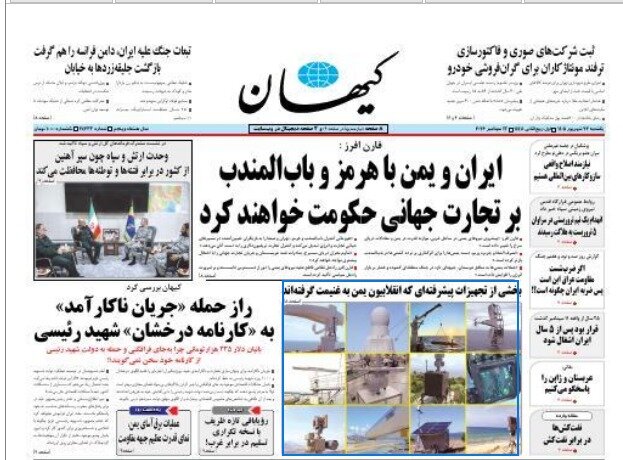
Kayhan, in a note discussing recent developments in the Middle East, argues that a new strategic power structure has emerged within the Resistance axis. This new power is the result of several interconnected factors: Iran’s ability to overcome and outmaneuver the United States, Israel, and their regional allies, Yemen’s offensive military capabilities, and the steadfastness of Lebanon and Palestine.
These elements have combined to create a coherent and consolidated strategic force that has “broken through all barriers” and established a new regional equation stretching from the Mediterranean Sea to the Indian Ocean. This new equation has taken shape over nearly three decades of conflict, and despite the severity of ongoing events, it is now entering a phase of final stabilization. When, in the midst of Yemen’s successful operations and Iran’s repeated strikes, certain Arab governments ask Iran to reduce tensions with the United States, Israel, and themselves, it reveals that all previous options against the Resistance have become obsolete. The current moment is one of consolidating the Resistance’s major achievements, and that such consolidation requires a cleansing of the region, meaning the removal of destabilizing or hostile elements.
Sobh-e-No: BRICS; from potential cooperation to operational implementation
Sobh-e-No analyzed President Pezeshkian’s trip to New Delhi for the BRICS summit. The visit has two main dimensions. First, bilateral relations between Iran and India. The meeting between Pezeshkian and Indian Prime Minister Narendra Modi highlighted the importance of Tehran–New Delhi ties. Both sides emphasized expanding cooperation and continuing strategic agreements. Second, turning BRICS cooperation into practical mechanisms. Tehran’s focus during this trip was on ensuring that BRICS membership does not remain at the level of political dialogue. Instead, Iran wants BRICS capacities to be transformed into operational frameworks in areas such as trade, financial systems, use of national currencies, and broader economic cooperation. The simultaneous presence of both leaders at the BRICS summit created an opportunity to pursue bilateral and multilateral diplomacy at the same time.
Javan: The Strait of Hormuz will not be reopened
Javan discussed the recent understanding reached between Tehran and Muscat, with Persian Gulf foreign ministers present. According to the paper, the agreement is strictly technical, concerning the details of new entry and exit routes in the Strait of Hormuz between Iran and Oman. Other Persian Gulf states are attending the meeting only to signal their implicit non‑objection to the international community. Javan emphasizes that this understanding does not mean the Strait of Hormuz will reopen. Iran has delivered seven conditions to the United States through intermediaries. These conditions have been approved by Iran’s highest authorities, and until they are fully implemented, the strait will remain closed. Thus, the Iran–Oman agreement does not signify reopening; rather, it establishes that if the strait is eventually reopened, it will be done under this specific framework, which the paper describes as a major step in asserting Iran’s sovereignty. Any reopening depends entirely on US compliance with Iran’s conditions.
Ham‑Mihan: Why has Iran’s nuclear file returned to the UN Security Council?
Ham‑Mihan explains that Western governments are trying to move Iran’s nuclear issue from the IAEA Board of Governors back to the UN Security Council to create a “two‑track process.” Track One is the JCPOA & Snapback Mechanism. This track is based on alleged Iranian violations of the JCPOA. However, China and Russia opposed this path in the Security Council, preventing it from gaining full legal legitimacy. Track Two is Safeguards Non‑Compliance Referral. This new track focuses on alleged Iranian non‑compliance with its IAEA safeguards agreement. The key difference of the second track is that because in the Board of Governors, there is no veto, so a resolution can be passed and the case referred to the Security Council. Once referred, China and Russia cannot easily dismiss the IAEA’s findings and will face a more difficult diplomatic position. Ham‑Mihan argues that the Western goal is for these two tracks to reinforce each other, increasing pressure on Iran.
Farhikhtegan: Dynamite in the oil market
Farhikhtegan analyzed the reasons behind the surge in oil prices above $100 per barrel. The paper says that although analysts cite various factors, they all agree on one central issue: geopolitical developments in Yemen and around the Bab al‑Mandab Strait. Energy experts argue that the main issue is not just reduced supply but the shrinking security margin of the global oil market. Key factors include: ongoing restrictions in the Strait of Hormuz, increased control by Yemen’s Ansarallah around Bab al‑Mandab, reduced Russian supply and refining capacity, declining global inventories, and changes in China’s oil purchasing patterns. However, the $109 price recorded on Thursday night was clearly the result of Ansarallah’s dramatic and rapid territorial advances, which sharply intensified geopolitical risk and pushed prices beyond the $100 threshold.