Araghchi warns of further escalation around Strait of Hormuz
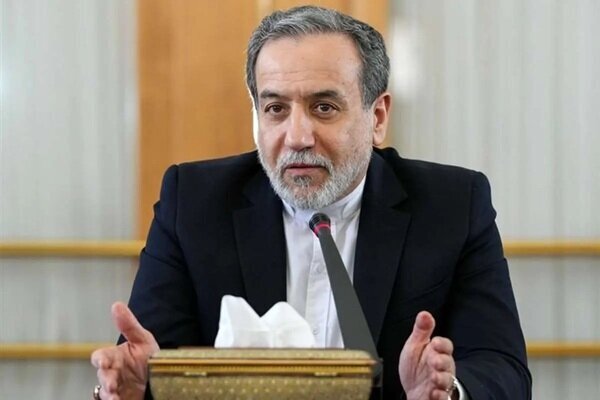
In an article published in the Financial Times, Araghchi also revealed that Iran had submitted a seven-day proposal to the United States through mediators, outlining steps to end the war, reopen the Strait of Hormuz and resume negotiations toward a final agreement.
Referring to his meetings with several foreign ministers on the sidelines of last month’s United Nations General Assembly, Araghchi said that although the discussions covered different issues, they conveyed a common message: Iran wants a fair and dignified agreement with the United States.
He said reaching such an agreement would require the White House to demonstrate genuine seriousness and resolve to permanently end its acts of aggression against Iran.
Araghchi stressed that Iran was firmly pursuing a peaceful and dignified solution to the conflict while remaining fully prepared to defend itself.
He said U.S. President Donald Trump entered the war based on fundamentally mistaken assumptions about Iran’s resilience and endurance. According to Araghchi, Trump appears to continue receiving misinformation suggesting that Iran’s armed forces are incapable of defending the country, an assessment that, he said, is contradicted by the available evidence.
He added that Iran’s armed forces had learned valuable lessons from Israeli and U.S. military actions against the country since 2025.
Araghchi said Iran had absolutely no confidence in the U.S. government’s stated desire for peace.
To explain Tehran’s position, he pointed to military attacks in June 2025 and February 2026, saying they took place while negotiations were actively underway.
He also said Iran came under attack for a third time in June this year, shortly after an agreement had been signed by Iranian President Masoud Pezeshkian and Trump.
Asking how Iran could trust the U.S. president again, Araghchi said there was little reason to expect progress under current circumstances, given that the White House had shown neither a willingness to reach an understanding on the way forward nor any intention of abandoning threats to use further force.
Araghchi said the recent escalation across the region demonstrated how quickly the conflict could spread and how far-reaching its consequences could become, posing a serious threat to international peace and security.
Despite these circumstances, he said, his responsibility as a professional diplomat was to make every possible effort to give diplomacy a chance, even when the prospects for success were limited.
The Iranian foreign minister revealed that, through mediators, he had presented Washington with a seven-day proposal on the sidelines of the recent UN General Assembly session. The plan outlines steps both sides would need to take to end the war and reopen the Strait of Hormuz.
Araghchi stressed that the proposal did not require the United States to take any action to which it had not already agreed.
Under the proposed timeline, the Strait of Hormuz would reopen on the sixth day, while negotiations toward a final agreement would resume on the seventh day. Araghchi said implementing the plan could gradually restore normal life across the region.
Araghchi also addressed the economic consequences of the war for the United States, saying the White House was refusing to acknowledge the mounting costs borne by ordinary Americans.
Citing an estimate by credit rating agency Moody’s, he wrote that U.S. military action against Iran had cost American consumers approximately $265 billion in the current year alone, equivalent to about $2,000 per household.
He said the sharp increase in energy prices accounted for nearly half of that amount, while the estimate did not include the much greater damage inflicted on the global economy.
Araghchi added that damage to numerous U.S. military bases across the region and the loss of substantial quantities of military equipment further highlighted the consequences of the war for American interests.
Referring to Iran’s geographical position, Araghchi said the country would always have significant leverage over maritime traffic through the Strait of Hormuz because of its location.
He argued that, despite discussions about alternative routes, the waterway could not be replaced for either the region or the global economy.
At the same time, he said Iran intended to remain committed to its historic role in safeguarding the Strait of Hormuz and protecting vessels that pass through it lawfully.
Araghchi said a way out of the crisis remained possible, but it would require the U.S. government to sincerely acknowledge that military options were no longer effective.
Referring to nearly eight months of war, he said none of the objectives Washington had publicly announced for its attacks on Iran had been achieved.
In conclusion, Araghchi reiterated his warning that any further escalation around the Strait of Hormuz or elsewhere in the region would seriously threaten civilian lives, the security and prosperity of regional countries, and the global economy.
He warned that if the United States once again chose military action over diplomacy, the outcome would be a far greater strategic defeat.
Emphasizing Iran’s long and proud history, Araghchi said the country would not bow to any power. He added that Tehran remained prepared to give diplomacy another chance if it saw clear evidence that Washington was genuinely willing to pursue a fair and dignified solution aimed at permanently ending the conflict.
Araghchi concluded that repeating the miscalculations Trump made about Iran at the start of the war would lead to far more painful consequences under the current circumstances.
MNA