Iran–Korea Chamber report highlights South Korea’s youth employment for knowledge exchange
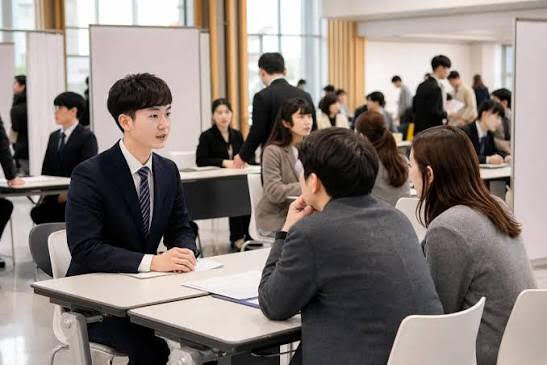
TEHRAN- The Iran–Korea Chamber of Commerce has released its fifth policy report, examining South Korea’s efforts to help young people move from education into employment. The report, “From Degrees to Experience: How South Korea Is Building a Bridge into the Labour Market for Young People,” places particular emphasis on opportunities for exchanging policy knowledge, institutional experience and practical approaches between the two countries.
A shared policy question
At the center of the study is a shared policy question: how can education and training systems better respond to employers’ evolving needs while giving young people a credible first opportunity to demonstrate their skills? Rather than presenting South Korea’s approach as a ready-made solution, the report considers which institutional practices may offer useful lessons for dialogue and carefully designed experimentation in Iran.
South Korea’s employer-led approach
South Korea’s K-New Deal Academy, launched in 2026, illustrates an employer-led approach. According to the Korean Ministry of Employment and Labor, participating major companies design and operate vocational training and related programs tailored to their fields. The ministry has described initiatives involving Samsung and Hyundai Motor Group, including training linked to company expertise and future mobility. These examples show how firms can contribute not only training places but also practical content, mentoring and exposure to workplace expectations.
The Korean government’s proposed 2027 budget would expand K-New Deal Academy to 50,000 participants, with KRW 489.5 billion allocated to the initiative. This is a proposal, not a final enacted appropriation or evidence of employment outcomes. The academy should also be distinguished from separate youth work-experience programs and from K-Digital Training, another Korean initiative focused on advanced digital skills.
The report highlights a division of responsibilities that merits further study: public authorities set policy objectives and funding arrangements; businesses identify skills needs and help design practical learning; and intermediary institutions, including chambers of commerce, can coordinate participation and reduce the costs of connecting young people with employers. This model may offer a productive starting point for professional dialogue between Iranian and Korean institutions.
A proposed pilot for Iran
For Iran, the report proposes exploring a small, measurable “Youth Work Experience Bridge” pilot, potentially coordinated through chambers and sectoral associations. Such a pilot could bring together employers, education providers and public institutions around short, supervised projects responding to actual business needs. The proposal is a recommendation from the report, not an existing bilateral program or an announced agreement with Korean counterparts.
Evidence, evaluation and knowledge exchange
Knowledge exchange could focus on how Korean programs recruit employers, design project-based learning, support participants, ensure quality and evaluate results. It could also examine safeguards against substituting trainees for regular employees, as well as methods for tracking subsequent employment, wages and job retention. These are areas where comparative research and practitioner-to-practitioner discussion may be more useful than directly replicating a program’s budget or scale.
The study cautions that the success of a training or work-experience initiative cannot be judged solely by enrolment or participant satisfaction. Evidence on the long-term employment impact and cost-effectiveness of the new 2026 Korean programs remains limited. For this reason, the Chamber’s report advocates evidence-based learning, independent evaluation and adaptation to each country’s labor-market and institutional conditions.
By bringing Korean policy experience into a structured discussion of Iranian labor-market challenges, the report seeks to contribute to a broader agenda of Iran–Korea knowledge exchange—one that connects research with business practice and supports constructive dialogue on human-capital development and youth employment.
Background and source notes
Based on the Iran–Korea Chamber of Commerce’s fifth policy report (October 2026). The report’s recommendations are analytical proposals, not jointly agreed bilateral projects.
Korean Ministry of Employment and Labor, 2026 K-New Deal Academy participating-company announcement (22 April 2026); Samsung program release (30 July 2026); Hyundai Motor Group program release (27 July 2026).
Korean Ministry of Employment and Labor, 2027 budget proposal infographic (11 September 2026): K-New Deal Academy, KRW 489.5 billion and proposed capacity of 50,000.
Iran–Korea Chamber of Commerce | English media brief | October 2026